 Rajat Sharma
Pharmaceutical Manufacturing
What Are Cardiovascular API Intermediates and Why Generic Manufacturers Need Them?
Cardiovascular API intermediates are the chemical building-block compounds produced during the multi-step synthesis of cardiovascular Active Pharmaceutical Ingredients (APIs) — such as statins, antihypertensive, and anticoagulants. Cardiovascular API Intermediates are not yet active drug substances themselves, but Cardiovascular API Intermediates represent the critical intermediate stage between raw chemical inputs and the finished API used to manufacture heart medicines.
Cardiovascular disease remains the leading cause of death worldwide, and the demand for affordable generic heart medications continues to climb every year. Behind every low-cost statin or blood pressure tablet sits a complex manufacturing chain — and intermediates are the unsung middle link in that chain. In this guide, we’ll break down exactly what cardiovascular API intermediates are, how they’re made, and why generic drug manufacturers rely on them so heavily for cost control, quality, and supply security.
What Are API Intermediates? (Quick Definition)
An API intermediate is a compound formed at any intermediate stage of a multi-step chemical synthesis that eventually produces a finished Active Pharmaceutical Ingredient. Intermediates are partially processed chemical structures — they carry some of the molecular framework of the final API, but require additional reaction steps, purification, or modification before they become the active drug substance.
Difference Between API, Intermediate, and Finished Dosage Form
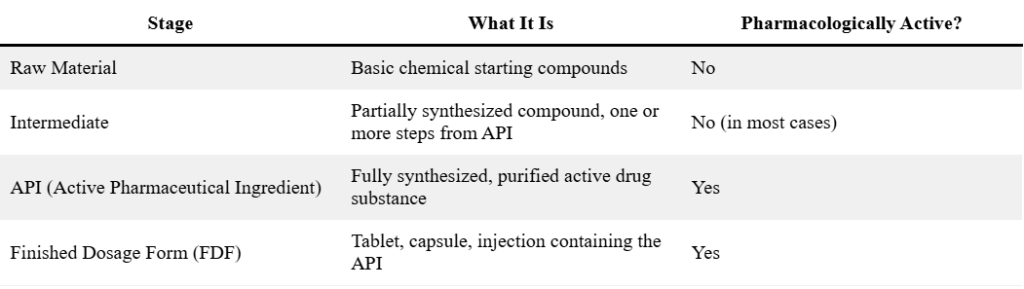
Where Intermediates Sit in the Drug Manufacturing Chain
In a typical pharmaceutical supply chain, raw materials are converted into one or more intermediates through controlled chemical reactions. These intermediates are then carried forward — either by the same manufacturer or a downstream buyer — through final synthesis, crystallization, and purification steps to yield the finished API. That API is finally formulated into tablets, capsules, or injectables by a finished dosage form (FDF) manufacturer.
Understanding Cardiovascular APIs and Their Intermediates
Cardiovascular drugs span several therapeutic classes, each with its own synthesis pathway and corresponding intermediates.
Common Cardiovascular Drug Classes
- Statins (cholesterol-lowering) — e.g., atorvastatin, rosuvastatin
- Antihypertensives (blood pressure control) — e.g., amlodipine, losartan, telmisartan
- Anticoagulants (blood thinners) — e.g., clopidogrel, rivaroxaban
- Antiplatelets — e.g., clopidogrel, ticagrelor
Examples of Key Cardiovascular API Intermediates
| Finished API | Drug Class | Key Intermediate (Example) |
|---|---|---|
| Atorvastatin | Statin | Atorvastatin Lactone / Diol intermediate |
| Rosuvastatin | Statin | Rosuvastatin Methyl Ester |
| Amlodipine | Antihypertensive | Amlodipine Free Base intermediate |
| Clopidogrel | Antiplatelet | Clopidogrel Base / Resolution intermediate |
How Cardiovascular API Intermediates Are Manufactured
Manufacturing a cardiovascular intermediate is a precise, multi-stage chemical process that demands tight process control and consistent quality at every step.
Typical Synthesis Route Stages
- Starting material selection — sourcing high-purity raw chemicals
- Core reaction step(s) — building the molecular backbone through controlled reactions (condensation, esterification, halogenation, etc.)
- Isolation and purification — removing by-products and unreacted material
- Crystallization or distillation — refining the intermediate to required purity
- Quality testing — confirming identity, purity, and impurity profile before release
Quality Parameters Manufacturers Must Control
- Chemical purity — typically required at 98%+ for downstream API conversion
- Impurity profiling — identifying and limiting genotoxic or process-related impurities
- Polymorphism control — ensuring consistent crystal form, which affects downstream API behavior
- Residual solvent levels — compliance with ICH Q3C guidelines
Why Generic Manufacturers Specifically Need These Intermediates
Generic pharmaceutical companies — unlike innovator companies — typically don’t develop a cardiovascular molecule from scratch. Their competitive edge lies in efficient, compliant, and cost-effective manufacturing. This is exactly where intermediates become strategically important.
Cost Efficiency vs. Backward Integration
Building in-house capability to produce a cardiovascular API from raw chemical starting materials requires significant capital investment in plant, equipment, and specialized expertise. By sourcing pre-made intermediates, generic manufacturers can skip the most capital-intensive early synthesis steps and focus their investment on the final conversion stages — significantly lowering production costs.
Faster Time-to-Market for ANDA/Generic Filings
Speed matters in the generics business, especially around patent expiry windows. Using validated intermediates from an established supplier shortens development timelines, since manufacturers don’t need to optimize an entire synthesis route from the ground up before filing an Abbreviated New Drug Application (ANDA) or equivalent regional dossier.
Supply Chain Flexibility and Risk Mitigation
Relying on a single, fully integrated API source creates a single point of failure. By sourcing intermediates from multiple qualified suppliers, generic manufacturers can diversify their supply base, reduce dependency risk, and respond more flexibly to demand spikes or geopolitical disruptions.
Regulatory Compliance Support (DMF/CEP Availability)
Reputable intermediate suppliers often support their customers with Drug Master Files (DMFs) or Certificates of Suitability (CEPs), which streamline the regulatory documentation generic manufacturers need to submit alongside their drug applications.
Key Challenges in Sourcing Cardiovascular API Intermediates
Quality Consistency and Batch-to-Batch Variation
Even small variations in impurity levels or crystal form between intermediate batches can affect the final API’s stability and bioequivalence, making supplier quality systems critical.
Regulatory and Documentation Requirements
Generic manufacturers must ensure their intermediate suppliers can provide complete analytical data, stability data, and traceability documentation to satisfy regulators like the US FDA, EMA, or WHO-GMP authorities.
Geopolitical and Supply Chain Disruptions
A large share of global pharmaceutical intermediates are manufactured in a concentrated number of regions, which can expose buyers to trade restrictions, logistics delays, and pricing volatility.
How to Choose a Reliable Cardiovascular API Intermediate Supplier
- Regulatory certifications — GMP compliance, valid DMF/CEP filings
- Manufacturing capacity — ability to scale from pilot to commercial volumes
- Track record — proven supply history with generic or innovator companies
- Analytical transparency — full Certificate of Analysis (CoA) and impurity data for every batch
- Technical support — responsive technical teams for process or specification queries
Frequently Asked Questions
What is the difference between an API and an intermediate?
An intermediate is a compound produced during the synthesis of an API. It is not yet pharmacologically active or finished — it still requires one or more chemical steps before becoming the final, active API used in a drug product.
Why can’t generic companies just buy the finished API?
Many do buy finished APIs, but sourcing intermediates instead lets manufacturers control the final synthesis steps, customize impurity profiles, lower costs, and avoid over-dependence on a single API supplier.
Are cardiovascular API intermediates regulated by FDA/EMA?
Intermediates aren’t approved individually the way finished APIs are, but their manufacturing process and quality are reviewed as part of the overall API and finished-drug regulatory filing, since impurities formed during intermediate synthesis can impact final product safety.
How long does intermediate-to-API conversion take?
This depends on molecule complexity, but converting a key intermediate into a finished API generally involves one to three additional synthesis and purification steps, taking anywhere from a few days to several weeks at commercial scale.
Conclusion
Cardiovascular API intermediates may sit in the middle of the pharmaceutical supply chain, but their role is anything but minor. For generic manufacturers, sourcing quality intermediates is a strategic lever — one that reduces capital burden, accelerates time-to-market, strengthens supply chain resilience, and supports regulatory compliance. As global demand for affordable cardiovascular medicines continues to grow, partnering with a dependable, quality-driven intermediate supplier isn’t just a procurement decision — it’s a competitive advantage.
Looking for a Reliable Cardiovascular API Intermediate Partner?
Talk to our technical team about quality, capacity, and regulatory documentation for your next product.
Follow us on Instagram : rokadoverseas