 Rajat Sharma
A grounding overview of how demand dynamics, market maturity, and manufacturing complexity differ between Gliptin vs SGLT2 Inhibitors APIs — useful context before deciding where to focus portfolio development.
📅 Updated August 2026 | ⏱ 9 min read | 🏷 API Market Strategy
Quick Answer
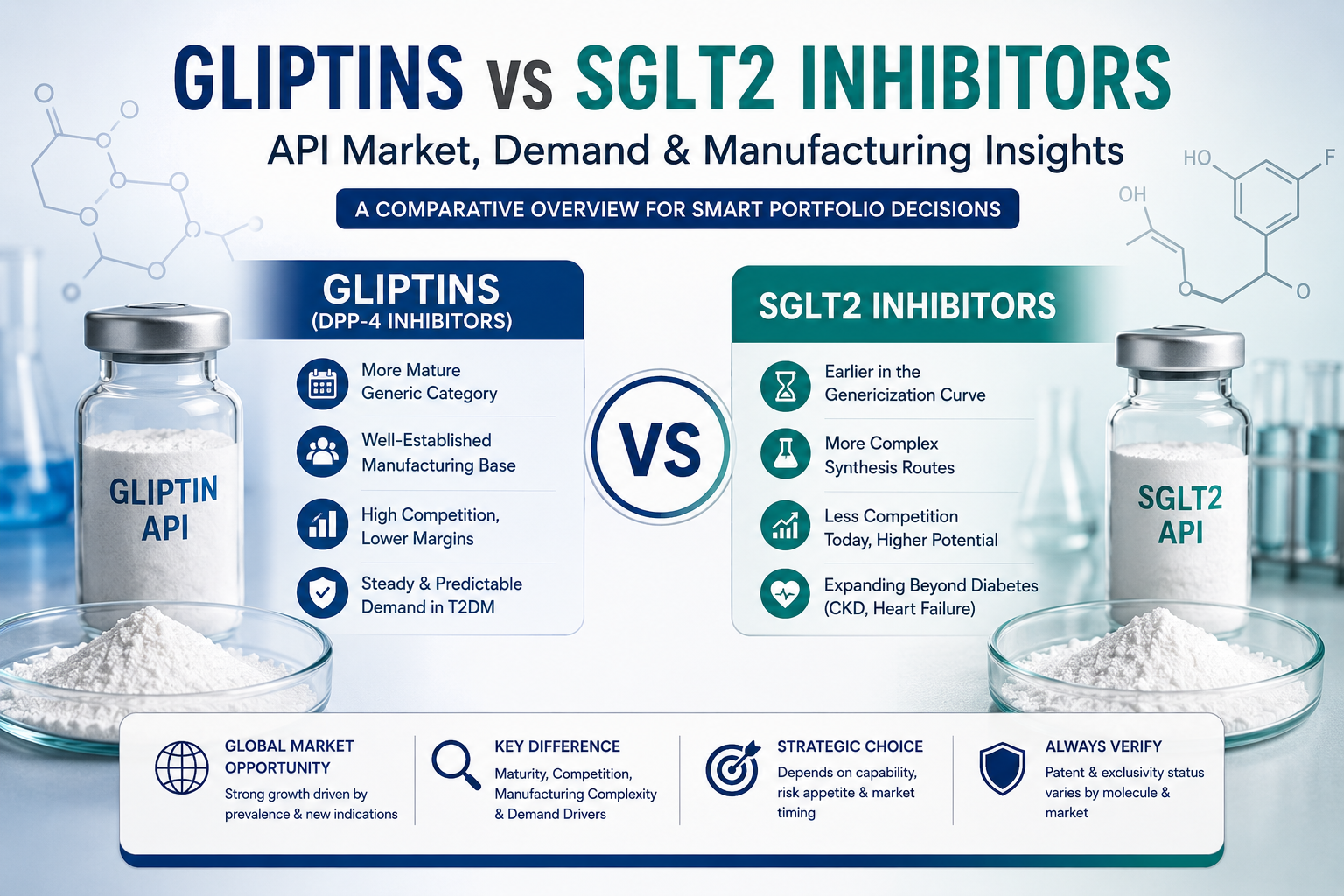
Gliptin vs SGLT2 Inhibitors, Gliptin (DPP-4 inhibitors) are the more mature generic category — most molecules in the class have been off-patent longer, the manufacturing base is well established, and competitive intensity is correspondingly higher. SGLT2 inhibitors are earlier in their genericization curve, with a less crowded supplier base, generally more complex synthesis chemistry, and demand that’s actively expanding due to label growth into heart failure and chronic kidney disease indications beyond diabetes. Neither is a clearly “better” category — the right choice depends on a manufacturer’s existing capability and risk appetite. Patent and exclusivity status vary by molecule and market, so always verify current status for your specific target country before planning around it.
Gliptin vs SGLT2 Inhibitors — Two Distinct Antidiabetic API Categories
Both drug classes treat type 2 diabetes, but they work through entirely different mechanisms. Gliptins (DPP-4 inhibitors) — vildagliptin, sitagliptin, saxagliptin, linagliptin, and alogliptin among them — block the DPP-4 enzyme to prolong the activity of incretin hormones, increasing insulin secretion in a glucose-dependent way. SGLT2 inhibitors — dapagliflozin, empagliflozin, canagliflozin, and others — block glucose reabsorption in the kidney, causing excess glucose to be excreted in urine instead.
Both classes remain part of current type 2 diabetes treatment guidelines, often used in combination with metformin or with each other. For generic API manufacturers, the mechanism difference matters less than the demand and manufacturing dynamics each class presents — which is where the two categories genuinely diverge.
Market Maturity — Where Each Class Stands Today
Gliptins: A Longer Generic History
Several gliptins, including vildagliptin and sitagliptin, have been on the market long enough to have an established generic manufacturing base across India, China, and other API-producing regions. This means well-documented synthesis routes, a wider pool of experienced manufacturers, and generally lower barriers to entry for a company already equipped for this chemistry family.
SGLT2 Inhibitors: Earlier in the Genericization Curve
SGLT2 inhibitors as a class reached the market later than gliptins, and several molecules are still under patent or regulatory exclusivity in various markets. Where genericization has begun, the supplier base is comparatively newer and less saturated — fewer established manufacturers, but also less mature process optimization and cost efficiency than what’s typical in the gliptin space.
What the Maturity Gap Means
A more mature category generally means tighter margins and more established competition, but also more predictable sourcing and better-characterized manufacturing routes. A newer category means less competition today, but also more due diligence required around supply chain maturity and route optimization.
Patent and Exclusivity Timelines
As a general pattern, most gliptins have already cleared patent expiry in a majority of major markets, which is a large part of why the generic gliptin manufacturing base is as established as it is today. SGLT2 inhibitors, by contrast, follow a more staggered pattern — some molecules are further along toward genericization than others, and patent and regulatory exclusivity status can differ significantly by country.
Verify before planning around this: Patent and exclusivity dates vary by molecule, formulation, and jurisdiction, and can shift due to litigation, patent term extensions, or regulatory data exclusivity separate from the core patent. Treat this section as directional context, not a substitute for checking current status in your specific target market before committing R&D or manufacturing resources.
For portfolio planning, the practical takeaway is that gliptin opportunities are largely about competing well in an open market today, while SGLT2 inhibitor opportunities are more about timing — positioning to enter as individual molecules clear exclusivity in specific markets.
Clinical Demand Drivers Behind Each Class
Gliptins — Steady, Established Demand
Gliptin demand is tied closely to standard type 2 diabetes management, where they’re generally positioned as a well-tolerated second- or third-line option, often favored for their low hypoglycemia risk. Demand is steady and predictable, but not seeing the kind of expansion into new therapeutic areas that would meaningfully grow the category beyond diabetes prevalence trends.
SGLT2 Inhibitors — Expanding Beyond Diabetes
SGLT2 inhibitors have seen their clinical use broaden significantly beyond glycemic control, with several molecules gaining approval for heart failure and chronic kidney disease indications independent of diabetes status. This label expansion is a meaningful demand driver that gliptins simply don’t have, and it’s part of why interest in SGLT2 inhibitor generic manufacturing has been building even while several molecules remain under exclusivity in various markets.
Manufacturing and Sourcing Complexity Differences
Gliptin synthesis routes vary by molecule but are generally well-characterized after years of commercial-scale production experience across the industry — as detailed in our companion article on gliptin intermediates, the class splits into adamantane-based and aminopiperidine-based building block families, both of which are now well understood.
SGLT2 inhibitor synthesis generally involves glycosylation chemistry — coupling an aryl core to a sugar moiety with controlled stereochemistry, as covered in our dapagliflozin intermediates article — which tends to be more technically demanding than gliptin coupling chemistry. This raises the technical barrier to entry, but also means fewer manufacturers can execute it well, which is itself a competitive advantage for those who can.
Gliptins vs SGLT2 Inhibitors -Side-by-Side Comparison
| Factor | Gliptins (DPP-4 Inhibitors) | SGLT2 Inhibitors |
|---|---|---|
| Generic Market Maturity | Established, competitive | Earlier stage, staggered by molecule |
| Typical Synthesis Complexity | Moderate, well-characterized | Higher, glycosylation-dependent |
| Key Demand Drivers | Standard T2D management | T2D + heart failure + CKD expansion |
| Label Expansion Trend | Limited beyond diabetes | Actively expanding |
| Competitive Intensity | Higher (mature category) | Lower today, rising as molecules genericize |
What This Means for Generic Manufacturers Building an Antidiabetic Portfolio
Entering the gliptin space today generally means competing on cost and reliability within an already crowded, well-understood market — a reasonable move for manufacturers with existing capability in that chemistry family, but not a category where technical differentiation alone creates much of an edge. Entering the SGLT2 inhibitor space means taking on more synthesis complexity and closer attention to patent timing, in exchange for a market that’s still expanding and less saturated with established suppliers.
Many manufacturers with a diabetes-focused portfolio don’t treat this as an either/or decision — they maintain gliptin capability for steady, established volume while selectively building SGLT2 inhibitor capability for individual molecules as they approach genericization in specific target markets. Which approach makes sense depends heavily on existing manufacturing capability, risk tolerance, and which markets a company is targeting.
Frequently Asked Questions
What is the main difference between gliptins and SGLT2 inhibitors?
Gliptins (DPP-4 inhibitors) work by blocking an enzyme that breaks down incretin hormones, increasing insulin secretion. SGLT2 inhibitors work by blocking glucose reabsorption in the kidney, causing excess glucose to be excreted in urine. Both treat type 2 diabetes but through entirely different mechanisms.
Which class has more generic manufacturers currently active?
Gliptins generally have a larger, more established generic manufacturing base, since several molecules in the class have been off-patent longer than most SGLT2 inhibitors. SGLT2 inhibitor genericization is progressing but remains earlier-stage and more staggered by molecule and market.
Are SGLT2 inhibitors becoming more important than gliptins in diabetes treatment?
SGLT2 inhibitors have seen significant clinical demand growth due to label expansion into heart failure and chronic kidney disease indications beyond diabetes, which gliptins have not seen to the same degree. This doesn’t make gliptins obsolete, but it does mean SGLT2 inhibitors are capturing a growing share of clinical attention and prescribing volume.
Is SGLT2 inhibitor API synthesis more complex than gliptin synthesis?
Generally yes. SGLT2 inhibitor synthesis typically involves glycosylation chemistry with controlled stereochemistry, which tends to be more technically demanding than the coupling chemistry used in most gliptin synthesis routes. This raises the barrier to entry but can also be a competitive advantage for manufacturers who execute it well.
Should a generic manufacturer prioritize gliptins or SGLT2 inhibitors?
It depends on existing manufacturing capability, risk tolerance, and target markets. Gliptins offer a more established but competitive opportunity; SGLT2 inhibitors offer growing demand and less saturated competition, but require more complex chemistry and closer attention to patent timing by molecule and market. Many manufacturers pursue both rather than choosing one exclusively.
Conclusion — Understanding the Category Before Choosing a Direction
Gliptins and SGLT2 inhibitors represent two different kinds of opportunity for generic API manufacturers — one mature and competitive, the other earlier-stage and still expanding. Neither is inherently the better bet; the right direction depends on a manufacturer’s existing chemistry capability, appetite for technical complexity, and which markets and molecule timelines it’s positioned to serve. Before committing resources to either category, verify current patent and exclusivity status for your specific target markets rather than relying on general class-level trends.
Exploring gliptin or SGLT2 inhibitor manufacturing?
Dive into our intermediate specification guides for both drug classes, including verified CAS numbers and synthesis-stage breakdowns.
Follow us on Instagram : rokadoverseas